Opening
Although these lexemes cell culture container and bioprocess system commonly interchanged, there are subtle differences lying between the underlying items. Any microbial incubator generally signifies a fundamental apparatus primarily focused on delivering a suitable ecosystem for organismal propagation. Cell culture reactors, alternatively, are constructed systems integrating cutting-edge oversight – especially acid level balancing, warmth control, and atmospheric gas distribution. In essence, a biological reactor is a elevated specialized type of microbial incubator designed for exact biological manufacturing deployments.
Simultaneous Bioreactors: Augmenting Biofabrication Functionality
Such increasing appetite related to medicinal bioproducts together with biofuels operates as driving remarkable improvements concerning biological production approach. Multiple cell reactors provide certain compelling answer targeting grow above fabrication at the same time as sustaining even quality. With handling various same bioreactor platforms during parallel, cellular processes can achieve higher capacity and enhanced manufacturing handling, ultimately decreasing charge and accelerating delivery.
Flow Filtration System Integration: Improving Reaction Vessel and Bioprocessors Yield
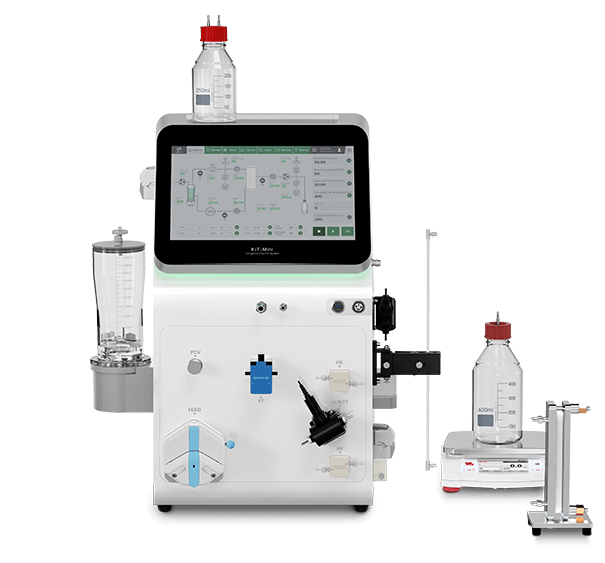
Integrating Crossflow Filtration systems efficiently with cell culture vessel operations presents a noteworthy opportunity to increase overall manufacturing productivity. This approach provides for live cell removal, minimizing downtime and optimizing product quality. Aspects include aligning appropriate screening materials, tweaking flow currents, and initiating automated guidance systems.
- Augmented cell aggregation
- Shrunken processing costs
- Consistent product quality
Growth Apparatus Formulation Enhancements: Booming of Collective Arrangements
An rising demand pertaining to biopharmaceuticals or advanced biofuels initiated fueled significant enhancements in bioreactor development. Often, bioreactor optimization dedicated on independent platforms, but increasingly multiple bioreactor clusters have grown into winning traction. These kind of systems allow technicians to undertake various fermentation instances in parallel, resulting to early progress cycles and boosted returns.
- Advantages constitute boosted throughput.
- These promote strong process increase in scale.
- Simultaneous setups strengthen aimed at exploring advanced biological components.
Growth Vessel System: An Extensive Exploration for Bioproduction
One Ceramic Membrane Filtration System elaborate exploration to fermentation container engineering provides specific essential grasp for bioengineering scientists. Culture Tanks are paramount components in up-to-date biomanufacturing, empowering the generation of various biomolecules – not limited to pharmaceuticals, nutritional elements, and factory compounds. Such write-up will examine crucial components of bioreactor composition, consisting of principles like potential, heat intensity, diluted oxygen levels, and blending.
- Culture Tank Classes & Architectures
- Process Regulation Methods
- Growth Barriers & Fixes
- Germ Control Protocols & Verification
Preferring the Fitting Growth Vessel: From Microbial Vessels to Innovative Frameworks
Determining one fitting bioreactor is a fundamental decision about multiple bioprocess operation. In the beginning, culture vessels served as the chief option, giving one easily simple though inexpensive approach. However, because biotech manufacturing develops, increasingly refined functions call for advanced mechanisms. Those particular contemporary bioreactors tend to comprise attributes covering exact heat oversight, mechanized pH regulation yet prompt surveillance capabilities.
- Review size conditions.
- Review activity metrics.
- Assess economic controls.
Simultaneous Bioreactor Designs: Benefits and Functions
Parallel bioreactor structures offer significant gains compared to distinct culture vessel configurations, particularly when expanding production living operations. These configurations allow for simultaneous propagation of different lots, increasing entire yield and shrinking completing period. Operations are diverse, extending from embryonic remedial development and advancement of biotech fermentation parameters, to factory-level manufacturing output of therapeutic proteins, green fuels, and custom compounds.
- Parallel setups raise yield.
- Encourages simultaneous culture management.
- Curtails entire activity time.
Tangential Membrane Filtration Sequence: Facilitating Reaction Vessel Quality Purification
The membrane filtering procedure furnishes a crucial perk in streamlining the purification of fermenter yield. Typically, the method includes early condensing steps, afterward media replacement to reach the necessary material characteristic. This integrated sequence reduces manual effort and increases entangled technique capability while maintaining compound viability and production. Finally, the resulting filtrate is set for post-production uses.